Tampilkan postingan dengan label Intelligence. Tampilkan semua postingan

Kamis, 21 Maret 2013

How to Memorise Numbers

Memorising numbers can be a tricky thing to do, it is said that a person can hold up to an average of 7 digits at any given time. This is fine when trying to remember up to the magic-7 mark, but what about when you need to memorise longer numbers for whatever reason, for example: mobile phone numbers (which are 11 digits), or bank card numbers, or maybe a set of codes/passwords that are for you job or security reasons? What do you do then. 

Well as I just mentioned the average amount of numbers a person can hold up to in his/her mind at a given time is 7, so you may be able to do more or less than that, however, there are ways you can get far beyond this figure - into memorising huge numbers that are hundreds of digits long, some people can even remember numbers up to thousands of digits long. It's all about technique, and the technique that is needed is mnemonics. 
If you are not sure about what mnemonics are then here is a post that you may find useful: Mnemonics.

1.  Major Memory System

This is one of the most popular systems that people use to memorise numbers. Each numeral is associated to a consonant, with w, h, y, x, and vowels being ignored serving as 'fillers' to create actual words. Here is the most common layout:


0 s, z, soft c z is the first letter of zero. The others have a similar sound.
1 d, t, th d and t have one downstroke and sound similar (notice the tip of your tongue as you say them).
2 n n has two downstrokes.
3 m m has three downstrokes, also m looks like a 3 lying on its side.
4 r the last letter of four, also 4 and R are almost mirror images of each other.
5 l L is the Roman numeral for 50.
6 j, sh, soft ch, dg, zh, soft g a script j has a lower loop like 6. These letters also have a ‘whistle-like’ sound, and 6 looks like a whistle.
7 k, hard c, hard g, q, qu capital K contains two 7s (on their sides, back to back).
8 v, f think of v as in a V8 motor. f sounds similar (notice how your teeth touch your lips for both).
9 b, p p is a mirror-image 9. b sounds similar and resembles a 9 rolled around (also notice how your lip movement is the same when pronouncing these letters.)
- vowel sounds, w, h, y, x These sounds can be used anywhere without changing a word’s number value.


The number you are trying to memorise would be placed into the table to turn into words. For example: the number 55. As you can see in the table the letter 'l' is associated with the number 5, and as our number is 55, after looking at the table we get 'll' (55). Now that we have this we have to now turn it into a word using vowels, w, h, y, and x. To me the word yeLL comes to mind, so you can imagine a person yelling to remember the number 55. 

So you're probably saying this is fine for two digits but what about for longer digits. Okay, so our next example is going to be: 43665645. The trick with this is to split the number into smaller more manageable chunks. So we're going to tackle this like so: 43, 66, 56, 45. For 43 we get 'rm' so I'm going to turn that into 'RuM' - this now becomes the first picture of your mind. I'll now go ahead and sort out the words for the rest of the numbers: for 66 we'll have 'JoG', for 56 we'll have 'LeDGe', and for 45 we'll have 'RuLe'. Now we need to put them together into a sequence - imagine a man drinking some 'RuM' whilst on a 'JoG, who falls off of a 'LeDGe' with judges around him telling him that he broke a 'RuLe'. It may seem like a lot of effort to remember that, but once you have gotten used to what number corresponds to what letter, it will become much more reliable and is something that you can use to remember longer numbers. 
The hardest part of this system is getting to grips with the table.

2. Peg Words

If you want to take this even further you can then create a 'peg-word' for each number up to 100. This will take more time to learn and become fluent with than the major memory system table, however this way is more effective and can make it quicker to memorise. There are two ways you can do this, you can either create 'peg-words' for each number using the system in trick #1, or you can assign whatever you want to each number. 
I prefer to personally assign each number an image of my choice, things that are in my life or are memorable to me for whatever reason. This includes people, items, characters, all of which are easy for me to picture in my mind. 

Once you have assigned a 'peg-word' to each number and have become familiar with each one, then next thing to do is to use them in a memory palace. I won't go into what a memory palace is in this article as I've already written about it, so instead I'll refer you to them: Memory Palace and 5 Steps to Create a Memory Palace.

3. Grouping

This is a technique that a lot of people use for phone numbers and other numbers of similar length, even if they don't realise that they're doing it. Grouping is simply breaking the number up into smaller groups so that you have an easier time to remember it. So for example a number like 347596 on its own is harder to remember in a short amount of time than if we were to split the number up to make it (347) (596). It seems like groups of 3 work well for our minds and grouping is what a lot of people naturally do when trying to ingrain a number into their mind. 

This technique though is very limited in that whilst it can enable you to quickly pick up a smaller number like 6 or so digits, it is near enough useless for remembering much larger numbers, unless if you were to be extremely repetitive. No, for larger numbers, mnemonics is much much more effective and even for establishing smaller numbers in your long-term memory. 

4. Repetition

Another way that can work is through that of simply repeating the number over-and-over until you have it logged in your long-term memory. Of course all of these techniques will require you to incorporate repetition as to keep them fresh in your mind, however you are able to remember numbers just through repetition and not having to incorporate mnemonics. Mnemonics are a much more powerful tool  though and will make things so much quicker and easier to remember.

There are things you can do to make just repeating the number over-and-over again a little more powerful. You could try writing it down several times instead of saying it out loud, also say it in your head. Even though I prefer using mnemonics (and is something I use for larger pieces of information) I have to say that I have been able to memorise people's mobile numbers from my contacts (11 digits in length) by setting those numbers as the password on my phone (which allows up to 16 digit number passwords), so every time I use my phone - I have to type in the number, which is another form of repetition. I will say that it has been so much easier memorising people's phone numbers this way than simply saying them over-and-over again.

Conclusion

Everyone is different and our minds work in individual ways, so for me using the peg-word method and incorporating it into a memory palace is the best for me, however for you it might not be the best way because your mind doesn't work like that. You should try all of these methods and ones I haven't mentioned until you find one that is right for you.

Kamis, 06 September 2012

How to Improve your Reading Ability

We read every day in this modern era, maybe not in the form of a book but in other ways. Emphasis is being placed more and more on reading. You find it everywhere: books, instructions, advertisements, signs, labels, stickers, technology etc. Basically reading is something that is part of this world.

Believe it or not, if you are wanting to improve your reading skills, it's totally within your grasp. Just follow these simple tips and you'll see an improvement over time and with consistency. 

1. Read more

There are people out there, I'm sure you know one or two of them, who are very gifted readers and have a very impressive reading ability. Normally these people will have their head in a book giving the impression that they are sort of non-stop readers.

Well, there's no coincidence that these seemingly gifted readers are always reading because it's all the reading that they do that gives them a brilliant reading ability. Now I'm not saying that all gifted readers read a lot - some are just naturally gifted (like everyone is at something), but on the whole the majority of readers with great reading ability is as a result of reading a lot.

So make it a goal to start reading more, you don't have to start swallowing books each day but reading two or more pages of something wouldn't hurt. Pick a book and say to yourself "I'm going to read at least 'x' amount of pages each day until this book is finished. Make sure that you do do this every day - exposure is the best thing you can do. After that book is finished, or other reading material, move onto the next. 
A great motivational technique that you may find useful is 'don't break the chain'.

Also when you're out and about, take time to read signs, markings, advertisements and the like. This is so that you can have as much exposure as possible to reading. 

2. Learn vocabulary

This is another simple yet affective tip to do - learn the meaning of more words. When reading you're bound to at some time or another come across a word that you aren't too familiar with. So by looking it up will cause you to have a greater understanding of what you are reading and at the same time will get you used to pronunciation (that's if you make sure that you pronounce it when looking it up,) helping with when you come across similar constructed words in the future.

3. Read challenging material

Making sure that you keep challenging yourself with new, innovative, and hard material is brilliant for improving your reading. If you are always reading material that you feel comfortable with - that's both good and bad. It's good because you know what your reading ability is able to handle, it's bad because you're not pushing yourself to think about what you're reading - not in the same sense as when you read challenging material. For example: a piece of challenging material may take the form of a non-fictional quantum-mechanics book. Whilst you may not know about quantum-mechanics, you are bound to come across unfamiliar words, layout, and/or style. It's things like this that will get you used to reading harder texts and is something that you should consider if wanting to see a good improvement of your reading ability.

4. Read out loud and in your head

Another thing you can do that will make you think more about what you are reading is to read both in your head and out loud. Do about half a page out-loud and then switch to in-head. This will get you used to switching between out-loud and in-head and will cause you to think slightly differently between these two actions about the pronunciation of words. It's also helpful if you will have to read out loud to groups of people, whether that's as a student in class or a person giving a public speech. 

5. Read where you can concentrate

It's no good reading something that you aren't able to focus upon because of outside influences, for example; a distracting and noisy environment. It's no good reading a piece of material if you aren't going to be able to properly focus on it, and if you're not going to properly focus on it then you are not going to get the benefits of reading or see an improvement in your reading ability.

Some people are able to remain focused in even the most distracting locations - something that comes with practice, and so for them at least, it would be fine to read in noisy and distracting places because they can still keep a good level of concentration. For the majority of us this isn't the case and so reading somewhere where you are less compelled to look away from what you are reading would be a better choice. 

Conclusion

Improving your reading skills will take time for your mind to adapt, as the skill of reading is a difficult one, but when you start to read regularly and apply these tips, you're bound to see an improvement as time goes by. It's just getting yourself to take the time to have a go - that's the most difficult part. Good luck.

Jumat, 29 Juni 2012

Analysis Paralysis

Analysis Paralysis refers to when an individual over-thinks a situation, so-much so that the individual never actually ends up making a decision. This effect is what is known as analysis paralysis.

A person who experiences analysis paralysis won't make a decision and then change it if a major obstacle of difficulty arises, like other people would, instead they want to make the optimal choice, the 'perfect solution'.

It seems when a this person tries to make a decision, they are overwhelmed with the amount of analysis they have to, or feel they have to do. Then the benefits of the outcome of the decision no longer out-way the effort that they feel is needed to analyse the decision-factors. So you are probably starting to see why a person who suffers with analysis paralysis will find it difficult to make a decision.

Sometimes the process of decision-making can be too tough for the decision-maker, and because of the amount of options that they are faced with, they are overwhelmed and are not capable of making a rational, logical decision. 

One of Aesop's fables touched upon analysis paralysis, even if it wasn't known as that back-then. 'The fox and the cat'. The fox boasted about the amount of escape routes he had, while the cat only had one sure way of escape in the event of danger. One day both the fox and the cat heard the hounds heading their way. The cat escaped up a tree, but the fox was busy deliberating about the best escape, in the act of doing so - was caught. The moral was; better to have one sure way, rather than a hundred ways you cannot be sure.

Analysis paralysis is something that can happen to anyone, but is more likely to happen to the more indecisive or reluctant people. It can happen to others though. I myself am not the most decisive person, but am trying to get better at it. However, I don't think I've experienced analysis paralysis, well, not on a regular basis anyway. :)

Analysis paralysis can border on O.C.D and can become an incredibly hard habit for a person to stop. A person who has analysis paralysis can't be reasoned to stop the habit, as they think in a different way, so to try to get them to stop being particularly over-analytical will seem un-rational to them. This person will normally be quite intellectual and therefore, will think quite intellectually. The more they do though, the more processes they may think-up to analyse, but the more processes there is, the more likely they are to become overwhelmed, ending-up not making a decision. 

You will need to try and stop them from planning and analysing decisions, which is what IS a logical thing to do and in other posts of mine, I have stressed why it is the right thing to do to think and analyse a decision before you make it, however, for a person who suffers from analysis paralysis, they need to avoid doing this to help them to get out of the habit.

Also an over-analyser might not even be aware that they experience analysis paralysis. To them, they just don't have the right decision to go with and so just don't go with one, thinking themselves to being optimal in their actions.

This post was meant to be about what analysis paralysis is, maybe in the future I will come back to this subject and write about some ways people can get around this particular problem. The closest related post I have written to that would be; how to become more decisive. 
I meant to post this two days ago, but because of hay-fever and a bit of a mild cold, I didn't feel like doing so. Got some medication for them though, so it's all good...or better than it was at least. :)

Rabu, 20 Juni 2012

Optimal Thinking

What is Optimal Thinking?

Optimal thinking is the process of making the best decision possible for the circumstance you are currently in. Often when we make decisions, it's decided in an instance, we don't generally spend half a minute or more debating with ourselves what we're going to do. As a result, we don't always make the right decisions, although for a lot of decisions it's a given what we should do. We have the power to either make an optimal decision or a suboptimal decision.
Making bad decisions is easily done, and I would go even to far as to say that we make at least


one bad decision every day. Let me explain what I mean by this before I carry on. When I'm discussing making a bad decision, I'm not only talking about decisions that have negative impact on us or others, but about good decisions as-well, to a certain extent. Now this may sound confusing, as surely a good decision is a good decision and not a bad decision. Well, this is both true and untrue. In general these decisions would be good, however when applying optimal thinking to ourselves, then they're not good. Optimal thinking is about making the best decision in your circumstance, not making a good one. So by making a good decision when there is a better one, now makes that first decision the wrong decision to go with, in turn making it a bad decision. Remember this is in the terms of optimal thinking. 


So when applying optimal thinking to our lives, you're really thinking as such: how can I make the best decision (x), to obtain the best possible outcome (y)? You may be thinking already that this is just common sense and that it's already something that applies to your life. But is it? Your first reaction will be yes as we all have some idea of what the outcome is going to be or how our decision will affect the outcome. 
This though, is when we confuse good decisions with the best decisions. Good decisions (which ironically are bad decisions) are things you can come to in an instance without too much effort put into it, the best decisions however, are not so easily thought of. I'm not saying that you can't make the best decision in an instance, but I am saying that it's easier to make that good decision in that time-frame rather than the best one. 
And whilst this may seem like an easy thing to do, you'll soon find with some decisions that it's not as easy as it first sounds. 

If you aren't a very decisive person though and are wanting to become more decisive so you can then better apply optimal thinking to yourself, then here's a previous post of mine: How to Become more Decisive.


What does optimal thinking apply to?

Optimal thinking isn't just something that pertains to decisions involving productivity or effectiveness around a task, but can apply to anything and everything. For example: interactions and communications with people, daily chores and jobs, career and work, life decisions etc.. 

Questions that should often be asked when trying to make an optimal decisions are; What is the best use of my time, what is the best thing I can say in response to this person, is there a better decision to make than the one that I'm about to make. There are more, but I'm sure that you get the idea to what optimal thinking involves and what it applies to.


Conclusion


The main point of optimal thinking is not to get you to spend more time thinking, but to get you to raise the bar in terms of decision-making. Yes raising the bar/standards will maybe cause you to take a longer time to make a decision, however it will be the best decision and so will be worth it, which is the overall purpose.

Senin, 11 Juni 2012

How to Improve your Maths

You might remember a while back when I posted an article called: Improve your mental maths, where I wrote about some simple tips to improve your maths mentally.
Looking back, there is a lot more to write about mental maths and I might publish a second blog post in the near future about more tips you can use. 

At the moment however, I'm going to write about how you can get better at mathematics in general and not just in your head.
For many people, maths is a dreaded subject simply because of the difficulty a lot of people find with it. It doesn't have to be though, and by using these tips, I'm sure your maths will start to see an improvement.

1. Practice

The main thing you can do which is going to help more than any other piece of advice on this list, is to practice, practice, practice. I can't stress enough how essential it is to practice. Whenever you see people who are good at something in particular; for example some who plays a musical instrument, won't have become brilliant overnight, things do take time and effort to see the results. This is no different for maths, so try to schedule yourself some time for it.

A brilliant thing you can do would be to incorporate maths into your daily life. For example: when shopping you could do the costs in your head, doing discounts and taxes, counting people and working out percentages of certain categories (like male:female ratio etc), and time maths - which incidentally could help with your time-management skills.

2. No calculator

I'm not stating that using a calculator is a bad thing to do as there are many instances where we cannot mentally calculate something. However, using a calculator too often will only get you more used to not doing the calculations for yourself. Sure, you're getting the answer - but do you really know how. 

When you're next faced with a math problem, instead of whipping out the calculator and punching in the numbers, try doing it for yourself. Over time you'll start to see problems become easier to solve.

3. Learn the Multiplication table

The multiplication table is a really great resource to use for becoming better at maths. It helps with multiplication, division, and addition - but mainly multiplication. Start by learning individual number sets. For example; your three times tables, then your four times tables, then five, six, seven, and so on...
Use the 20x20 multiplication table, which at first may seem daunting, but by doing a bit each day though, it won't look anywhere near as scary as it first did. Don't forget to be patient, you won't learn the table over night. You've just got to remind yourself that persistence is the key.

4. Enrol in a math class

Whilst it is certainly within your capabilities to teach yourself maths and become quite proficient in the subject, there is nothing like having a teacher (someone who knows what they're doing) for help, instruction, and guidance. 

A teacher will have a syllabus to stick to and will make sure that you get regular homework. Homework sounds bad and isn't everybody's favourite thing to do, but it does help you to cement things into your mind.
Going to the lessons will allow you to review maths fairy frequently as-well, so coupled with homework and revision, it should prevent rustiness. 

It's also a great opportunity for you to get some one-on-one help and advice. The great thing about maths is that there are multiple ways of doing certain problems, meaning you can use the method that feels most comfortable for you. Maths teachers will be able to advise you of some of the more effective ways to deal with particular maths problems.

5. Learn math terms

Make sure that you get to grips with mathematical terms. Having an underpinning knowledge of these terms will allow you to grasp the relationships they have with each other a lot easier than someone who doesn't know what these terms are. 

You don't have to learn all of them, but having an understanding of the common mathematical terms will be extremely beneficial for you. Some examples would be things like: average, circumference, diameter, area, volume, common denominator, cube root, factor, denominator and numerator, acute and obtuse angles, polygon, prime number, prime factor, radius, ratio, right angle, and whole number.

6. Use simple steps

When becoming familiar with a certain thing, try to organise a small, clear, simple set of instruction sheets for yourself to review and use. Using your instruction sheet, do a few practice questions. You'll notice that the more you do these questions and the more you refer back to your set of instructions - the easier and more ground into your mind it will become. 
This will mean that when you come to doing these problems without your instructions to refer to, because of the practice you've been doing, you will already know the steps you are going to take to solve the problem, and won't need your instruction sheet anyway. 

Compiling instruction sheets for individual problems and topics will be very beneficial for improving you maths. When you no longer need the sheets, don't throw them away. Keep hold of them and put them somewhere safe (like a folder) and review them from time-to-time. If you don't do maths frequently then you will start to forget how to do things, but having these clear set of instructions on-hand will mean re-familiarising yourself wont be too much trouble at all.

7. Write out problems

When solving problems, unless you're trying to become a lot better at mental maths, write down everything you do. This includes all formulae and working out. Make sure that it's not only written out in full, but that it is written neatly allowing you to know what's happening with a simple glance. 

While it is a lot more tempting for you to skip over bits and do them in your head, only writing down the answers, it isn't nearly as beneficial for you as writing them down in full is. It causes you to slow down as you're having to take the time to write the problem out, and causes you to think about the problem more. It also defines them in your memory.

It's great for going back and checking answers as you're bound to have one or two (or more) wrong when learning. If you've done it in your head, how will you know where you went wrong - you won't. If however, you've written out all of your workings and the procedures you used, and it's clear to read - it will make finding and correcting your error a lot simpler.

8. Don't learn things late at night

I know there will be lots of people who smile at this, knowing to-well how hard it is to effectively learn something late at night. Your brain has been active throughout the whole day and at this time of night will want some rest, so by making it continue working when it's already fatigued, would not be doing yourself any justice whatsoever. 

You'll find that you will start to notice small errors slipping into your process, which you know full well could have simply been avoided, but because your brain is tired, it's not able to tackle the problem all guns blazing like it normally would. 

It's not uncommon to start feeling your eyelids getting heavier and heavier, and to start reading the same line two or three times before dropping off to sleep.

Mornings are the best time of the day for concentrating on something, when your body has recharged its batteries and is ready to face another day. You will notice a difference when studying early in the morning rather than studying late at night.

Summary

These are some simple effective tips that will definitely help you to see an improvement in maths, and if done frequently and properly, I can guarantee that an improvement will be made. 

So to quickly sum up a few points: make sure you practice and review regularly, learn things when your concentration levels are high, write out the process you use, get yourself a teacher if possible, learn mathematical terms, try not to use a calculator where possible, learn the multiplication table, and make things simple for yourself. I hope this post has been of use to you. :)

Rabu, 14 Maret 2012

Top 10 Most Famous Scientists

When I was at school, I have to admit that I didn't really like science. Not out of difficulty, but out of disinterest. Now I'm older, I find science a lot more interesting and can appreciate the subject more.

Here are ten of the most famous scientists in my opinion. I know there are a few others that arguably should have made the list, but I settled with these ten in the end. Hope you enjoy.

1. Albert Einstein
Albert Einstein (14 March 1879 - 18 April 1955)  was a German-born theoretical physicist who developed the theory of relativity, who had a profound effect on physics and how it is perceived.

Einstein is considered by many to be the father of modern physics and one of the most respected intellects in human history.

Einstein published more than 300 scientific papers along with over 150 non-scientific works. His most well-known publications include: general and special relativity, photoelectric effect, mass-energy equivalence, theory of Brownian motion, the Einstein field equations, Bose-Einstein statistics, unified field theory, and EPR equation.

He has been awarded the Nobel Prize in Physics, Matteucci Medal, Copley Medal, Max Planck Medal, and the Time Person of the Century (1999).

2. Isaac Newton
Sir Isaac Newton (4 January 1643 – 31 March 1727) was an English physicist, mathematician, astronomer, natural philosopher, alchemist, and theologian, who has been considered by many to be the greatest and most influential scientist who ever lived.

His monograph Philosophiæ Naturalis Principia Mathematica is considered to be one of the most important scientific book in human history. He is most well known for Newtonian mechanics, Universal gravitation, Infinitesimal calculus, Optics, Binomial series, Newton's method, and Philosophiæ Naturalis Principia Mathematica.

3. Stephen Hawkiing
Stephen William Hawking (born 8 January 1942)  is a British theoretical physicist and cosmologist, whose scientific books and public appearances have made him an international academic celebrity.

Hawking was the Lucasian Professor of Mathematics at the University of Cambridge between 1979 and 2009. He then became research director at the university's Centre for Theoretical Cosmology.

Unfortunately, Hawking is bound to a wheelchair as he has a motor neurone disease that is related to amyotrophic lateral sclerosis, a condition that has progressed over the years. He is now almost completely paralysed and communicates through a speech generating device.

His main influences were the works published by that of Dikran Tahta and Albert Einstein. He is known for Black holes, Theoretical cosmology, Quantum gravity, and Hawking radiation.

Hawking has been awarded the Albert Einstein Award, Wolf Prize, Prince of Asturias Award, Copley Medal, and the Presidential Medal of freedom.

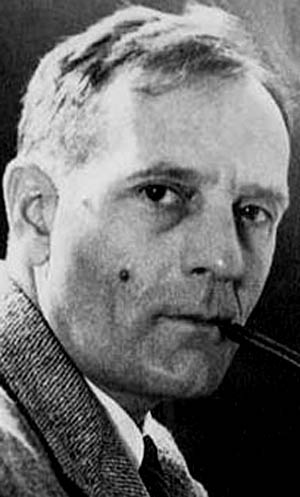
4. Edwin Hubble
Edwin Powell Hubble (November 20, 1889 – September 28, 1953) was an American astronomer who confirmed the existence of galaxies other than the Milky Way.

As a younger man, he was more noted for his athletic abilities than for his intellect, even though he achieved good grades in all his subjects apart from spelling. 

He's known for Hubble's law, Redshift, and the Hubble sequence.
His notable awards are: Bruce Medal, Franklin Medal, Gold Medal of the Royal Astronomical Society, and Legion of Merit.

5. Niels Bohr
Niels Henrik David Bohr (7 October 1885 – 18 November 1962 was a Danish physicist who made foundational contributions to understanding atomic structure and quantum mechanics.

He was part of the British team of physicists working on the Manhattan Project. Bohr married Margrethe Nørlund in 1912, and one of their sons, Aage Bohr, grew up to be a physicist who in 1975 also received the Nobel Prize.

Bohr is considered to be one of the most influential scientists of the 20th century. Bohr published his model of an atomic structure in 1913. He introduced the theory of electrons travelling in orbits around the atom's nucleus, the chemical properties of each element being largely determined by the number of electrons in the outer orbits of its atoms.

Bohr also introduced the idea that an electron could drop from a higher-energy orbit to a lower one, in the process emitting a photon of discrete energy. This became a basis for quantum theory.

He's known for Copenhagen interpretation, Complementarity, Bohr model, Sommerfeld–Bohr theory, BKS theory, Bohr-Einstein debates, and the Bohr magneton.
He has been awarded the Nobel Prize in Physics and the Franklin Medal.

6. Richard Feynman
Richard Phillips Feynman (May 11, 1918–February 15, 1988) was an American physicist.

He developed a widely used pictorial representation scheme for the mathematical expressions governing the behaviour of subatomic particles, which later became known as Feynman diagrams. 
During his lifetime, Feynman became one of the best-known scientists in the world. He assisted in the development of the atomic bomb and was a member of the panel that investigated the Space Shuttle Challenger disaster.

He is known for the Feynman diagrams, Feynman point, Feynman–Kac formula, Wheeler–Feynman absorber theory, Bethe–Feynman formula, Feynman sprinkler, Feynman Long Division Puzzles, Hellmann–Feynman theorem, Feynman slash notation, Feynman parametrization, Sticky bead argument, One-electron universe, and Quantum cellular automata.

He has been awarded the Albert Einstein Award, E. O. Lawrence Award, Nobel Prize in Physics, Oersted Medal, and the National Medal of Science.

7. Erwin Schrödinger
Erwin Rudolf Josef Alexander Schrödinger (12 August 1887 – 4 January 1961) was an Austrian born physicist and theoretical biologist who was one of the fathers of quantum mechanics, and is celebrated for a number of important contributions to physics.

His mother was half Austrian and half English; His father was Catholic and his mother was Lutheran. Schrödinger suffered from tuberculosis and several times in the 1920s stayed at a sanatorium in Arosa. It was there that he discovered his wave equation.

He is known for the Schrödinger equation, Schrödinger's cat, Schrödinger method, Schrödinger functional, Schrödinger picture, SchrödingerSchrödinger field, Rayleigh-Schrödinger perturbation, Schrödinger logics, and the Cat state.
He was awarded the Nobel prize in physics.

8. Ludwig Boltzmann
Ludwig Eduard Boltzmann (February 20, 1844 – September 5, 1906) was an Austrian physicist famous for his founding contributions in the fields of statistical thermodynamics and statistical mechanics.

In 1869 at age 25 he was appointed full Professor of Mathematical Physics at the University of Graz in the province of Styria.

He spent 14 happy years in Graz and it was there that he developed his statistical concept of nature. In 1885 he became a member of the Imperial Austrian Academy of Sciences and in 1887 he became the President of the University of Graz.

He is known for: Boltzmann's constant, Boltzmann equation, H-theorem, Boltzmann distribution, and the Stefan–Boltzmann law.

9. Max Planck
Max Karl Ernst Ludwig Planck (April 23, 1858 – October 4, 1947) was a German physicist who discovered quantum physics.

Planck's great-grandfather and grandfather were both theology professors in Göttingen, his father was a law professor in Kiel and Munich; and his paternal uncle was a judge.

Planck was a gifted musician and played three instruments (piano, organ and cello), as-well as composing and taking singing lessons. Despite his musical talent, Planck decided to go into physics instead.

He became good a good friend with Albert Einstein and the two often played music together.
Planck is known for: Planck constant, Planck postulate, and Planck's law of black body radiation.
He's been awarded the prestigious Nobel Prize in Physics. 

10. Werner Heisenberg
Werner Karl Heisenberg (5 December 1901 – 1 February 1976) was a German theoretical physicist who is best known for asserting the uncertainty principle of quantum theory. 

Heisenberg, along with Max Born and Pascual Jordan, set forth the matrix formulation of quantum mechanics in 1925.
Heisenberg attended the Bohr Festival in June 1922 in which Bohr was a guest lecturer and gave a series of comprehensive lectures on quantum atomic physics. There, 

Heisenberg met Bohr for the first time, and it had a profound and continuing effect on him.

He is known for Uncertainty Principle, Heisenberg's microscope, Matrix mechanics, Kramers-Heisenberg formula, Heisenberg group, Isospin, and Euler-Heisenberg Lagrangian.
He was awarded the Nobel Prize in Physics and the Max Planck Medal.
 
I don't claim ownership or credit for the pictures present, all credit is reserved for the original owners. No copyright intended and I'm not profiting off of them. If you have an issue with a picture that is present, then please contact me.

Kamis, 01 Maret 2012

What is an Eidetic Memory?

Memory is a strange thing, being able to recall on past experiences and information you've received.

If you think about it, your brain is really a huge archive of your life which you're in possession of. Some people are better at retrieving information from their archives than others, but some are beyond good and are brilliant at doing it. These individuals are said to have eidetic memory.

Eidetic memory is commonly referred to as photographic memory, and is the medical term which enables an individual to extract images, sounds, objects and the like, from their mind with clear precision and clarity.

Whereas photographic memory is limited to the ability of recalling images, eidetic memory is not, and as mentioned above, can also include sounds and objects.


One type of eidetic memory as observed in children, is characterised by the ability of an individual to study an image, for approximately 30 seconds, and maintain a nearly perfect photographic memory of that image for a short time once it has been removed.

The ability to recall an image relies heavily on a few factors, such as: duration of time exposed to image, conscious observation, relevance to the person, interest etc. 

People with good memories often think that they have an eidetic memory. However, people who have a good memory normally use some sort of mnemonic device as an instrument to achieve good memory, whereas a person with eidetic memory doesn't, and can still clearly with precision and remarkable detail, recall the nature and specifics of an event.

Some people with autism can demonstrate brilliant memory (such as an eidetic), including those with autism spectrum. 
Most people who are diagnosed with autism however, do not possess eidetic memory.

Much of the current controversy surrounding eidetic memory results from an overuse of the term to almost any example of dazzling memory skill.

This being said though, no-one claiming to have eidetic memory throughout history to present (except for the suspicious exception of Charles Stromeyer's wife Elizabeth), has been able to prove this in scientific tests.

Jumat, 10 Februari 2012

How to Build your Vocabulary?

Why Build A Better Vocabulary?

Regardless of your age or intelligence, having a good vocabulary will help you to have a better understanding of certain academical situations.

You'll find it easier to express yourself, and easier to explain things to others in a clearer fashion. You'll feel comfortable with different social situations, not having to withdraw from the conversation because of a subject that's alien to you.

Having a great vocabulary is great for job interviews, in fact interviews in general.
It can very helpful when reading texts that are unfamiliar to you.
You can also use them for games such as boggle, scrabble, and the like.

When having a good vocabulary, and being familiar with long and difficult words, it can be really useful for speaking publicly. 

It might seem like junk to learn, but it will stick with you and help you in the future.

1. Read, Read, And Read Some More 

This is one of the best ways to get yourself familiar with a larger range of vocabulary. Most of the words in your vocabulary have been learnt through context, and by exposing yourself to as much vocabulary as your can - it can only get better.

When you do come across a word that you're unsure about, try to imagine what it means and then look it up in a dictionary. Just keep repeating this process and you'll be surprised how much your vocabulary can improve.

2. Monitor The Context 

As I said in point #1, most of the words you learn is by context. So whenever you hear a word that you're unfamiliar with, try to understand the context it was used in. The great thing about this is you just have to be in ear-range of a person speaking, or within reach of reading material.

3. Look Up Words You Don't Know 

Try to get yourself into the habit of looking words up that you're unfamiliar with. If you're fortunate enough to have access to the Internet (which I'm assuming you do if you're reading this), you have loads of choices of dictionaries and thesauruses.

4. Learn A Word A Week 

Challenge yourself to learn a word a week. This is definitely doable, with seven days at your disposal to get accustomed to the new word. If you do this, you'll be expanding your vocabulary by fifty-two words a year. If this is too easy for you, then do two words a week, or three words a week - it's up to you. On the other-hand, if this is a bit much of a challenge, then do a word every two weeks.

5. Repetition 

It's no good learning a new word if you're going to forget it. You need to try and get it into your long-term memory.

Research suggests that by going over a word twenty times will help it to become part of your vocabulary.

You can review your words with index cards, or any other memory trick that can help with the memory process.

6. Insert Them Into Conversations 

Once you feel quite confidant that you know the meanings of a few newly-learnt words, your next step is to put them into a conversation. Don't try to use them in every sentence, but just insert them when the time is right, like you would with any other word.

The more used to the words you become, the more you're inevitably going to use them casually, not even having to think about when and where to say them.

7. Take Vocabulary Tests 

Get yourself to take a quick vocabulary test a day. You'll be forced to think about words, and words you come across that are unfamiliar to you, you can just look-up on a dictionary and become acquainted with.

You can find vocabulary tests on the Internet just by doing a quick Google search.

Some Words To Consider Using

Here's a few words you may want to learn if you're unsure which words to start with, but there are loads more out there to choose from:
  • Abhor
  • Abjure
  • Acquiesce
  • Arcane 
  • Avarice
  • Amiable
  • Brazen
  • Brusque
  • Candour
  • Chide
  • Clandestine
  • Coerce
  • Coherent
  • Connive
  • Debase
  • Decry
  • Demure
  • Deride
  • Despot
  • Embezzle
  • Enmity
  • Erudite
  • Extol
  • Feral
  • Fractious
  • Furtive
  • Gratuitous
  • Haughty
  • Impertinent
  • Impudent
  • Incisive
  • Indolent
  • Inept
  • Infamy
  • Innate
  • Insatiable
  • Insular
  • Intrepid
  • Inveterate
  • Jubilant
  • Knell
  • Lithe
  • Lurid
  • Maverick
  • Maxim
  • Modicum
  • Morose
  • Myriad
  • Nadir
  • Nominal
  • Nuance
  • Obsequious
  • Panacea
  • Penchant
  • Perusal
  • Plethora
  • Predilection
  • Repudiate
  • Rife
  • Salient
  • Serendipity
  • Staid
  • Superfluous
  • Sycophant
  • Taciturn
  • Truculent
  • Umbrage
  • Vex
  • Vociferous
  • Wanton
  • Zenith

Senin, 06 Februari 2012

How to Become Ambidextrous?

What is ambidexterity?

Ambidexterity is the ability to freely use both left and right external parts of your body (e.g. hands), both more or less with the same capabilities.

It's rare to find someone who is naturally ambidextrous, with the odds at every one in one-hundred people.

More often than not, it is more common to find people who were originally left-handed and then to have become ambidextrous. For example: through childhood where they were forced to write with the right hand, jobs where right-handed abilities are emphasised etc.

Right-handed people often become ambidextrous through injuries that limit use of their dominant hand.


Why become ambidextrous?

If you're wanting to achieve something or wanting try something out, there's always going to be a reason behind your choice. That shouldn't be different with the ability of ambidexterity.
I've written some reasons why you should consider it:

1. You break your dominant arm, causing it to be fully incapacitated. Do you want to be unable to write, draw, or whatever else that you need your dominant arm for?

2. With sports, when one arm gets tired, you will be able to switch more easily to the other one.

This can also be used for professional sports: baseball and cricket (to throw the opposition off-guard), for snooker (when the shot is easier to reach with the other hand), tennis where it's better to hit forehand with either hand. 

Some other sports you may want to use ambidexterity for are: golf, basketball, badminton, volley-ball, football/soccer (ambidexterity with your legs), boxing.

3. Some jobs and hobbies are easier when being ambidextrous. For example: sculpting, playing musical instruments etc.

How to become ambidextrous?

Unfortunately, if you're thinking of becoming ambidextrous, it does take time and regular use of you're less-dominant hand.

I've put together a list of different things you can do with your less-dominant hand to become ambidextrous. Note: it may feel weird to do things with your opposite hand in the first couple of weeks or so.

1. I'll start with one of the hardest things to do when wanting to become ambidextrous because of the precision needed. That is Writing. Try to write a paragraph or more a day with your less-dominant hand. Your muscles need development, so practice is the key.

2. Brushing your teeth.

3. Brushing your hair (if you do - I don't normally bother with brushing mine too often) :)

4. Using a computer mouse.

5. Sports.

6. Eating and drinking (maybe you shouldn't do this one in 
public until you've got the hang of it). :)

7. Wearing a watch on your opposite hand.

8. Shaving (be careful when first starting).

9. Cutting your nails (be careful with this as-well).

10. Opening cupboards, draws, and doors.

11. Drawing.

Senin, 16 Januari 2012

What is Memory?

Memory is the ability of an organism to retain, store, and recall past experiences and information.
There are three different stages of memory, these are: sensory, short-term, and long-term. Not everything is known about memory, and there is still a lot more to research.

Sensory Memory

After an object is received, approximately 200-500 milliseconds into the function, is what sensory memory corresponds to.

An example of this ability is being able to remember what an item looks like just a couple of seconds after viewing it.
There are different types of this memory, all of these lasting for a short amount of time and are not able to be recalled with clear precision, decaying over time.  


Short-term Memory

Short-term memory's capacity (like sensory memory) is also very limited, allowing a person to recall something for a period of a few seconds to a minute, without repetition or rehearsal.

A persons short-term memory capacity is said to be low, but can be improved with a technique called 'grouping'/'chunking'. This is where you split something into smaller more manageable sizes for your short-term memory to digest. For example: Someone gives you a number of 117342334. 

Instead of trying to learn the whole number off by heart, you would split it up to say: (117), (342), (334). Then you could (instead of naming these groups by there numbers, e.g. one, one, seven (117,)) name the three new numbers by there whole new numbers, e.g. one-hundred-and-seventeen, three-hundred-and-forty-two, three-hundred-and-thirty-four.

Herbert Simon found that the ideal 'grouping'/'chunking' size for numbers was three.

Short-term memory is believed to rely more on an acoustic code for retaining information, rather than, to an extent a visual code.

Long-term Memory

Whilst sensory and short-term memory have a limited capacity for retention and duration, long-term does not. This type of memory holds a far more vast quantity of information (some of these can last a lifetime).

With short-term memory, the likelihood of forgetting phone numbers, names, addresses and directions (and the like), is a probable circumstance. However, with long term memory (and techniques such as repetition), a huge amount of information can be catalogued inside the mind. For example: Lu Chao from China managed to recall off by heart 67,890 digits of pi! 

Baddely discovered (1966) that after 20 minutes, it was hardest to recall names, numbers, and words with similar meanings. (Big, large, huge; small, tiny, miniature, etc).